Monday, July 4, 2016
I've moved!
I will no longer be editing this blog. Please follow me over to www.jeddjong.net where new content will be posted, and thanks for reading my posts here on Blogger!

Wednesday, June 29, 2016
The Legend of Tarzan
For F*** Magazine
Cast : Alexander Skarsgård, Margot Robbie, Samuel L. Jackson, Christoph Waltz, Djimon Hounsou, Simon Russell Beale, Jim Broadbent
Genre : Action/Adventure
Run Time : 1 hr 49 mins
Opens : 30 June 2016
Rating : PG13 (Violence)
 Superheroes may reign
at the multiplex, but the Lord of the Apes is hoping to reclaim the crown. We
find John Clayton III a.k.a. Tarzan (Skarsgård) living a life of aristocracy in
London, alongside his American wife Jane Porter (Robbie). It has been years since
Tarzan has left the jungle and now, King Leopold II of Belgium has invited him
to return to the Congo Free State. Tarzan is initially reluctant to travel back
to Africa, but is convinced by George Washington Williams (Jackson), an
American diplomat who plans to investigate Leopold’s alleged use of slaves to
build a railway through the Congo. Tarzan is unaware that he is being lured
back to the jungle by the ruthless and avaricious Belgian Captain Léon Rom
(Waltz), who has offered to deliver Tarzan to the vengeful Chief Mbonga
(Hounsou) in exchange for diamonds. As Tarzan reunites with the various wild
animals he grew up amongst, the people of the Congo must fight for their
liberty.
Superheroes may reign
at the multiplex, but the Lord of the Apes is hoping to reclaim the crown. We
find John Clayton III a.k.a. Tarzan (Skarsgård) living a life of aristocracy in
London, alongside his American wife Jane Porter (Robbie). It has been years since
Tarzan has left the jungle and now, King Leopold II of Belgium has invited him
to return to the Congo Free State. Tarzan is initially reluctant to travel back
to Africa, but is convinced by George Washington Williams (Jackson), an
American diplomat who plans to investigate Leopold’s alleged use of slaves to
build a railway through the Congo. Tarzan is unaware that he is being lured
back to the jungle by the ruthless and avaricious Belgian Captain Léon Rom
(Waltz), who has offered to deliver Tarzan to the vengeful Chief Mbonga
(Hounsou) in exchange for diamonds. As Tarzan reunites with the various wild
animals he grew up amongst, the people of the Congo must fight for their
liberty.


THE LEGEND OF TARZAN
Director : David YatesCast : Alexander Skarsgård, Margot Robbie, Samuel L. Jackson, Christoph Waltz, Djimon Hounsou, Simon Russell Beale, Jim Broadbent
Genre : Action/Adventure
Run Time : 1 hr 49 mins
Opens : 30 June 2016
Rating : PG13 (Violence)


Edgar Rice Burroughs’ Tarzan is an
enduring figure in popular culture, but is now most often viewed as kitschy and
campy. Clad in a loin cloth, yelling as he swings through the trees – he’s not
exactly the action hero modern-day moviegoers have become accustomed to.
Director David Yates, best known for helming the final four instalments in the Harry Potter film series, endeavours for
viewers to take Tarzan seriously again. This take on the story is commendable
in that it wants to be about something, directly addressing the colonialist
politics and the unethical means by which various European nations went about
their conquest of Africa. It’s pretty heady stuff and the film’s approach errs
on the simplistic side, but there’s enough action to ensure the film doesn’t
get bogged down in its sombre themes.

Yates, working from a screenplay by
Craig Brewer and Adam Cozad, approaches this as a work of historical fiction. The
primary antagonist, Léon Rom, is an actual historical figure, who was known for
keeping severed heads in his flowerbed. In addition, George Washington Williams
as depicted in the film is a fictionalisation of a real-life Civil War veteran,
preacher, politician, lawyer, journalist and historian. The 1890 setting is
established with enough detail, but one does occasionally get the sense that
this is an adventure flick putting on stuffy period drama airs.

Skarsgård beat out the likes of
Henry Cavill, Tom Hardy, Charlie Hunnam and swimmer Michael Phelps, who was
toying with using this film to launch an acting career, for the title role. We
first see Tarzan as John Clayton III, trying to fit in among the upper crust,
and Skarsgård ably conveys that this is a man who is not in his element. While
Tarzan is traditionally viewed as a feral man, this version portrays him as a
person of both instinct and intellect, having mastered multiple languages and
well-versed in various cultures. He wants to be seen as more than a mere
oddity. Naturally, we get to see him doff his shirt, and any doubts that he
wouldn’t be able to pull off the necessary muscled physique are quickly
assuaged. For all his efforts, Skarsgård is still encumbered by a certain
stiffness, and this reviewer would like to have seen a more passionate,
unbridled Tarzan.

Yates wanted Jessica Chastain to
portray Jane and the studio had their eyes on Emma Stone, but it’s Robbie who
portrays Tarzan’s lady love. Robbie possesses an irrepressible radiance and
imbues Jane with a charming vigour. The film is able to strike a balance
between putting Jane in peril, as she is expected to be so Tarzan can rescue
her, while also making her a capable character in her own right. She holds her
own opposite Waltz, but the scene in which Jane grits her teeth to sit down for
dinner with Rom is a pale imitation of the similar scene between Belloq and
Marion Ravenwood in Raiders of the Lost
Ark.

There’s no denying Waltz is a
talented actor, but by now, audiences have begun to tire of seeing him typecast
as the villain, and he does nothing different as Rom. The character is the
embodiment of imperialist greed, striding through the jungle with fearsome
troops behind him, taking what he wants at will. There’s no nuance here, and
Waltz often seems extremely close to twirling his moustache. Hounsou strikes an
imposing presence as the tribal leader who has a long-standing vendetta with
Tarzan, but gets too little screen time for their conflict to take hold. Jackson
is entertaining as Williams and the character gets a moment to reflect on his
own history and explain his motivations. However, his performance can’t help
but come off as anachronistic, and Williams is very much a wise-cracking buddy
cop sidekick, which can pull one out of it at times.

There is a great deal of visual
effects work and a multitude of computer-generated animals required to populate
the Congo. Unfortunately, some of these beasts look sillier than others, and
several sequences, particularly a railroad ambush and an ostrich stampede, lack
polish. Tarzan calls on his animal friends for assistance during the climax,
and for a film purported to be a more serious telling of the Tarzan tale, it is
a little goofy.

The world was never aching for
another Tarzan movie, but this one
justifies its existence by incorporating historical elements and setting out to
make a statement about man’s relationship with nature. This is complemented by
a blend of National Geographic-style panoramic vistas and moderately exciting
action beats. While it lacks the heart of the animated version the target teen
audience might be most familiar with, it’s a fine addition to the Tarzan movie
canon, and definitely ranks far above the risible 2014 animated take.
Summary: Historical elements
are cleverly weaved into the familiar Tarzan tale and this is not as much of a
re-tread as one might expect, but there’s still a certain vitality missing from
this version.
RATING: 3.5 out of 5 Stars
Jedd
Jong
The Rezort
For F*** Magazine
Cast : Jessica De Gouw, Dougray Scott, Martin McCann, Jassa Ahluwalia, Lawrence Walker, Elen Rhys, Claire Goose
Genre : Horror
Run Time : 1hr 31mins
Opens : 30 June 2016
Rating : M18 (Violence and Some Coarse Language)


THE REZORT
Director : Steve BarkerCast : Jessica De Gouw, Dougray Scott, Martin McCann, Jassa Ahluwalia, Lawrence Walker, Elen Rhys, Claire Goose
Genre : Horror
Run Time : 1hr 31mins
Opens : 30 June 2016
Rating : M18 (Violence and Some Coarse Language)

The most dangerous game has
just gotten dangerous-er. In the aftermath of the Chromosyndrome-4 virus
outbreak, the world is reeling from a war between the living and the infected
undead. Entrepreneur Valerie Wilton (Goose) has established a game reserve
called ‘The Rezort’, an island getaway where paying guests can hunt and kill
zombies for sport. Melanie (De Gouw), a young woman whose father died in the
zombie war, goes to the Rezort with her war veteran boyfriend Lewis (McCann) in
search of catharsis. Joining them in the tour group are enigmatic sharpshooter
Archer (Scott), gamer teenagers Alfie (Walker) and Jack (Ahluwalia) and Sadie
(Rhys), who was supposed to go on the trip with her fiancé before he left her. All
hell breaks loose as a glitch in the security system allows the zombies to overrun
the island.

Director Steve Barker is no stranger to the zombie movie
subgenre, having made Outpost and its
sequel Outpost: Black Sun, featuring
Nazi zombies. The influences on The
Rezort are readily apparent: in addition to the obvious parallels with The Most Dangerous Game, this is best
described as “Jurassic Park with
zombies instead of dinosaurs”. John Hammond’s catchphrase in Jurassic Park was “we spared no expense”
– given the limited resources director Barker had at hand vis-à-vis the relatively ambitious scope of The Rezort, the production values are surprisingly decent. The
concept is realised with enough thought behind it and the Rezort has a nicely
developed corporate identity within the story. This is a B-movie through and
through, but it’s certainly not a bad premise. Paul Gerstenberger’s screenplay
takes stabs at confronting the ethical quandary of hunting what once were human
beings, and there’s a half-baked refugee allegory somewhere in there too. It’s
not lofty philosophy by any means, but it’s more than we expected from an
action-horror romp.

Unfortunately, it takes too long for the movie to kick
into gear, and once everything goes pear-shaped, the zombie mayhem is largely
repetitive and not terribly exciting. It’s the same thing a lot of zombie
flicks struggle with – the undead hordes chomp down on their victims or rip out
their throats, the human survivors blast a zombie in the head, repeat ad nauseam.

It
certainly doesn’t help that all the acting is patently unremarkable. Some might
recognise De Gouw from the recent Dracula
TV series or her stint as the Huntress on Arrow;
she’s little more than a generically pretty brunette and does not possess much
screen presence. It’s also a bad sign when the mysterious badass in your cast
is played by Dougray Scott, who probably still rues the day he had to drop out
of X-Men and was replaced by Hugh
Jackman. The two jumped-up teenage gamer characters are supremely annoying, but
that was likely the intention. Goose is pretty flat in the stock icy boss lady
role, which really could’ve been a lot of fun in the hands of someone like Cate
Blanchett or Glenn Close.

If you’re a genre aficionado and enjoy seeking out
low-to-mid-budget horror flicks that fly under the mainstream radar, The Rezort is worth a passing glance for
putting a somewhat inspired spin on the zombie movie formula. It’s plenty
silly, but does not get swallowed up entirely in said silliness and with a
better cast and a bigger budget, might actually have been almost good.
Summary: The Rezort lacks in thrills and its
ambition is hamstrung by its budget, but there are glimmers of wit in its
premise, such that it rises slightly above your run of the mill zombie flick.
RATING: 3
out of 5 Stars
Jedd Jong
Thursday, June 23, 2016
Last Days in the Desert
For F*** Magazine
Cast : Ewan McGregor, Tye Sheridan, Ayelet Zurer, Ciarán Hinds
Run Time : 1 hr 38 mins
Opens : 23 June 2016
Rating : M18 (Some Nudity)




LAST DAYS IN THE DESERT
Director : Rodrigo GarcíaCast : Ewan McGregor, Tye Sheridan, Ayelet Zurer, Ciarán Hinds
Run Time : 1 hr 38 mins
Opens : 23 June 2016
Rating : M18 (Some Nudity)

There was a meme
going around a while back, of a framed photograph atop an altar of Ewan
McGregor as Obi-Wan Kenobi in Attack of
the Clones, the idea being that some old lady thought it was a picture of
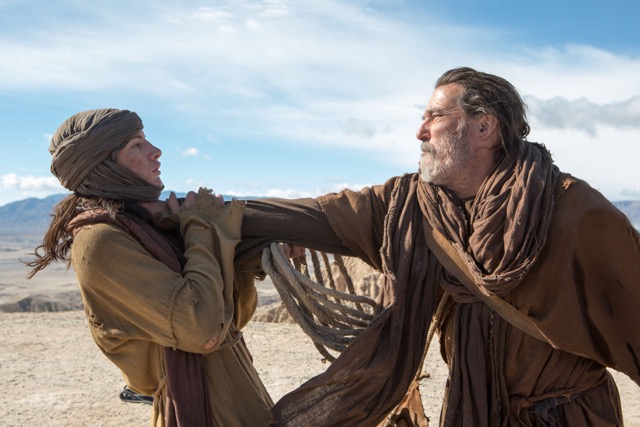
Jesus Christ. Here, McGregor actually plays Jesus, referred to as “Yeshua”. This
film imagines an incident during Jesus’ sojourn to the desert, during which He
was tempted by the Devil (also McGregor). Jesus comes across a family living in
the desert, comprising an unnamed Father (Hinds), a sickly Mother (Zurer) and
their son (Sheridan). The Devil poses a challenge to Jesus, wagering that the
Son of God will not be able to find a solution that will please each member of
the family. Jesus stays as a guest of the family, helping them out with a
construction project, while wrestling with the Devil, Father God seemingly
millions of miles away.

Writer-director Rodrigo García has
repeatedly clarified that this not your run of the mill Biblical epic, and is instead
an intimate drama and character study. The story of Jesus’ temptation in the
desert is told in three of the four gospels, and Christians will be familiar
with how Jesus refuted each of Satan’s challenges to Him by quoting from the
scripture. This film departs from tradition, but also does not feel like it’s
courting controversy for the, uh, hell of it. García explained his decision to
refer to Jesus as “Yeshua”, which is the original pronunciation, in an
interview with Christianity Today. “I
wrote a few pages in which I called Him ‘Jesus’, but when you’re writing a
screenplay and it says ‘Jesus walks, Jesus says,’ after a while, the weight of
the name is paralyzing,” García said.

There are individual elements to García’s
approach that are intriguing, but as a whole, the film often comes off as aimless
and meandering. If it was his intention to make the audience feel like they’re
spending 40 days and 40 nights in the wilderness alongside Jesus, then García
has succeeded. All things considered, the 108-minute running time is not
particularly long, but even then, this feels interminable at times. It seems
like three or four good ideas are spaced out, with a vast void in between. The
Oscar-winning Emmanuel “Chivo” Lubezki is the cinematographer here, but it is a
dull movie to look at, the desolate surroundings about as dull as one imagines
the average desert to look. The film was shot on location in the Anza-Borrego
Desert State Park in the Colorado Desert of Southern California, and it might
sound silly, but for this reviewer at least, the knowledge that this was filmed
in the United States did rob the movie of some authenticity.

Speaking of authenticity, this is
yet another Hollywood film in which a white man is cast as Jesus. We don’t want
to harp about issues of race and sure, there’s always room for poetic license, but
especially with an actor who feels as contemporary as Tye Sheridan running
about, it’s very hard to take this very seriously as a film set in Ancient
Israel. That said, McGregor does face the myriad challenges in portraying the
iconic religious figure head-on. There’s enough of a humanity to Jesus and at
one point, He even laughs at a fart joke, but McGregor’s portrayal does have an
undercurrent of reverence to it.

One of the smartest ideas on display is that of having
McGregor play the dual roles of Jesus and His tormentor Satan. A conversation
they have about the nature of God is the closest the film gets to any real theological
insight. For a movie that wants so much to depart from tradition though, it
seems a cliché that Satan wears jewellery as a way to differentiate him from
Jesus; that the bad guy has to be coded as flamboyant. The visual effects work
in duplicating McGregor is seamless and one does forget that there aren’t two
Ewan McGregors after a while.

On one level, this is a family
drama, with the parents and their child working out their issues while a house
guest is present. Hinds’ Father is a realist, a practical man who has his
doubts about issues of faith, but does not dismiss the holy man outright. The
struggles of a father in understanding his son are very relatable. Sheridan
shares some genuinely affecting moments in which the son bonds with Jesus, but
as alluded to earlier, he’s ultimately too American to be believable in this
setting. The mother is ill for most of the film, so Zurer has less to do
compared to Hinds and Sheridan, but the character’s pain still resonates.

Last
Days in the Desert feels more like a filmmaking experiment than a well-told
story, but García is largely able to strike a balance between portraying Jesus’
humanity and deity without getting caught up in that, or blazing down a
blasphemous path Last Temptation of the
Christ-style. Alas, it is likely that this will induce thumb-twiddling
rather than soul-searching.

Summary: Ewan McGregor shines in his dual role, but Last Days in the Desert’s loose structure and lack of narrative
drive keep its audience at a distance.
RATING: 2.5 out of 5
Stars
Jedd Jong
Thursday, June 16, 2016
Central Intelligence
For F*** Magazine
Cast : Dwayne Johnson, Kevin Hart, Amy Ryan, Aaron Paul, Danielle Nicolet, Thomas Kretschmann
Genre : Action/Comedy
Run Time : 1 hr 54 mins
Opens : 16 June 2016
Rating : PG13 (Some Sexual References and Coarse Language)



CENTRAL INTELLIGENCE
Director : Rawson Marshall ThurberCast : Dwayne Johnson, Kevin Hart, Amy Ryan, Aaron Paul, Danielle Nicolet, Thomas Kretschmann
Genre : Action/Comedy
Run Time : 1 hr 54 mins
Opens : 16 June 2016
Rating : PG13 (Some Sexual References and Coarse Language)

Over the past few years, Kevin
Hart has become the universal adapter plug of the buddy comedy subgenre, having
been paired with the likes of Will Ferrell, Josh Gad and Ice Cube amongst
others. This time, Hart is teamed with Dwayne “The Rock” Johnson. But is just
their disparity in physical stature enough to elicit the laughs?
Hart
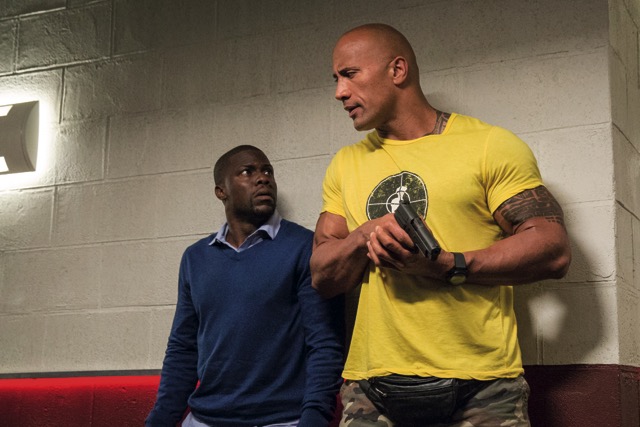
plays Calvin “Golden Jet” Joyner, who in high school, was a popular and highly
successful student. Robbie Weirdicht (Johnson) was an overweight social outcast
who was relentlessly bullied, and Calvin was the only one who would show him
any kindness. 20 years later, Robbie has undergone a complete physical
transformation and reinvented himself as “Bob Stone”. Calvin is married to his
high school sweetheart Maggie (Nicolet), but is unfulfilled in his accounting
career. Robbie and Calvin reunite, but Calvin is informed by CIA agent Pamela
Harris (Ryan) that Robbie is in fact a dangerous rogue agency operative wanted
for the murder of his former partner. Robbie tries to convince Calvin of his
innocence as the two go on the run, trying to stop classified intel from
falling into the hands of a mysterious underworld player known as “the Black
Badger”.

The
thinking behind Central Intelligence seems
to have been “just let the two leads loose, that should be plenty to carry a
movie.” Much of the would-be comedy is painfully unfunny, and the action is
generic and unimpressive. This is far from the first comedy in which a regular
Joe is flung into the mix of high-stakes international intrigue, and the plot
is painfully perfunctory and the final reveal is a predictable one. There’s an
anti-bullying message here, that if you’re picked on by the jocks in high
school, all you need to do is transform yourself into Dwayne “The Rock” Johnson
to get back at them. That should be pretty easy for anyone to do. The prologue
features Johnson’s face digitally pasted onto a different actor who portrays
the young Robbie; this effect is nestled deep in the uncanny valley and is
terrifying rather than funny.
To
the movie’s credit, it doesn’t go down the “one’s silly and the other’s stoic”
route typical of buddy cop flicks. While Hart does eventually go into shrill,
flailing mode, the character is likeable because of the kindness he shows
towards the underdog. Johnson does have fun with the Robbie character, who may
be all 6’ 5” of hulking muscle, but is the same awkward, socially mal-adjusted
kid deep down. The thing is, Johnson is too slick and polished to come across as
convincingly dorky. Nicolet’s Maggie is just “the wife” – the plot seems to
hint at how marrying one’s high school sweetheart may not be all it’s cracked
up to be, but doesn’t really go anywhere. Ryan is certainly far above the
material, and phones it in as the comically serious dogged agent hunting down
the suspect. Bateman is pretty much wasted as a stock slimy, snivelling banker
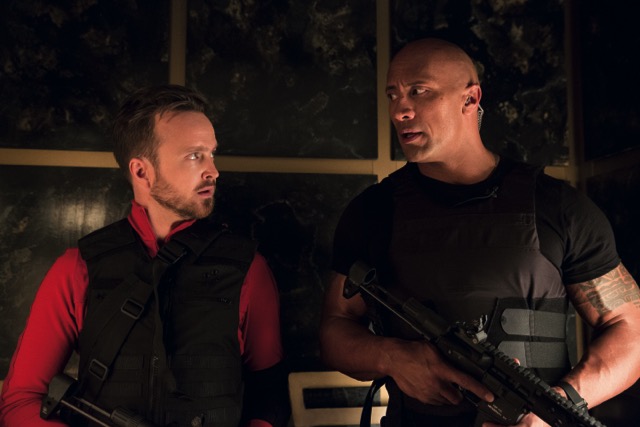
type, and Paul’s appearance amounts to little more than an extended cameo. Look
out for a prominent comedienne in the film's climax.

Central Intelligence has the same problem that most Kevin Hart vehicles have: the producers
bank too much on the comedian’s appeal to audiences and everything around him
seems to be on autopilot. It’s a wasted opportunity, especially since Hart is
paired with a bona fide action hero
like Johnson. Instead of a production line comedy with bits of action sprinkled
about half-heartedly, it would have been fun to see the duo tear into the
conventions of buddy cop and spy movies in a full-tilt action extravaganza
fuelled by belly laughs. The film trucks out the hoary dictum of “being
yourself” – we’ll bet it’s easy to “be yourself” when you’re Dwayne Johnson. The
scenes in which Robbie is wracked with anxiety brought about by the trauma he
endured in school did resonate a little with this reviewer, but it never seems
sincere enough to be a truly effective message. Sure, it’s sporadically amusing
just by dint of putting Hart and Johnson together, but it’s clear that Central Intelligence isn’t aiming for
any particular heights and is merely coasting along.

Summary: Sure,
the leading men have chemistry, but unremarkable action sequences and jokes
that are more cringe-inducing than genuinely funny ensure this won’t be front
and centre in most moviegoers’ memories after they leave the theatre.
RATING: 2
out of 5 Stars
Jedd Jong
Wednesday, June 15, 2016
Finding Dory
For F*** Magazine
Cast : Ellen DeGeneres, Albert Brooks, Hayden Rolence, Ed O’Neill, Kaitlin Olson, Ty Burrell, Diane Keaton, Eugene Levy, Idris Elba, Dominic West
Genre : Animation
Run Time : 1 hr 40 mins
Opens : 16 June 2016
Rating : PG
 Pixar beckons us back fathoms below in the sequel to Finding Nemo. In real life, it’s been 13 years since the first film, but our story picks up a year after the events of Finding Nemo. Dory (DeGeneres), the blue tang stricken with acute short-term memory loss, begins to have flashbacks to her childhood, hitherto entirely forgotten. Dory recalls her parents Charlie (Levy) and Jenny (Keaton), and sets out on a quest to track them down. Dory’s friends, the clownfish Marlin (Brooks) and his son Nemo (Rolence), accompany her from the Great Barrier Reef to the Marine Life Institute in California. There, they become acquainted with the cantankerous ‘septopus’ (he’s lost an arm) named Hank (O’Neill); Destiny (Olson), a near-sighted whale shark who was Dory’s childhood friend; Bailey (Burrell), a beluga whale with self-confidence issue, and the sea lions Fluke (Elba) and Rudder (West). While Marlin wants nothing more than to stay home, he has to brave the unexpected yet again so his friend can be reunited with her family.

Over the years, DeGeneres has relentlessly lobbied for a Finding Nemo sequel on her talk show. Not only has she gotten her wish, Dory has been bumped up to the main character. In addition to voice actors DeGeneres and Brooks, director Andrew Stanton has returned. Stanton also co-wrote the screenplay with Victoria Strouse, with Bob Peterson and Stanton receiving a “story by” credit. There was always the danger of this being a mere retread of the first film, now considered a classic of contemporary animation. While it does cover some of the same territory and doesn’t arrive at the same purity of emotion that Finding Nemo did, the sequel is still packed with heart and offers entertainment by the tank-full.

Sequels have a tendency to lose sight of what made the first film work in their pursuit of being “bigger and better”. Finding Dory is actually smaller in scope than the first film, with most of the action taking place within the Marine Life Institute, modelled on the famous Monterey Bay Aquarium. As we’ve come to expect from the studio, the animation is awe-inspiring and suffused with life, the environments spilling over with realistic detail. The animators have a lot of fun guiding Dory through the various mini-environments within the Marine Life Institute and the action sequences have a dynamic theme park ride feel about them.

Like its predecessor, it’s still a road movie: our heroes meet weird and wonderful personalities as they journey far from home in search of something, or someone. The story possesses a crucial forward momentum: there’s never a dull moment and the characters get from point A to point B in increasingly inventive ways. Not only is it fast-paced, it’s also frequently funny, with many jokes eliciting guffaws from this reviewer. A well-known actor who has appeared in a Pixar film before gets a riotous vocal cameo.
This reviewer was worried that Dory would be the latest victim of what we call “breakout character-itis”, wherein a supporting character becomes such a hit with audiences that their screen-time is massively increased in the sequel, sometimes to the film’s detriment. Dory’s appeal remains untarnished – much comedy is derived from the character’s ailment, but the film also recognises it as a source of profound tragedy, and this becomes the driving force in the plot. Dory’s back-story is established from the outset, and while it doesn’t quite tug on the heartstrings the way Nemo and Marlin’s bond did in the first one, there will still be no shortage of tears. Keaton and Levy bring understated warmth to the roles of Dory’s long-lost parents.

Marlin and Nemo receive just the right amount of character development: while they’ve both learned from their harrowing adventure, the essence of who they are remains unchanged. The pragmatism and impatience that Brooks brings to his performances ensure that Marlin remains an excellent example of the “comically serious” trope, while Rolence is as ideal a replacement for original Nemo voice actor Alexander Gould as any imaginable. Gould, now 22, has a vocal cameo.
O’Neill can play the curmudgeon in his sleep, and Hank is eminently endearing despite, or perhaps because of, his crankiness. Hank is the focus of many clever visual gags that make playful use of an octopus’ ability to contort itself and change its skin colour with the help of chromatophores to blend seamlessly into the background. Some of the other new characters, while often amusing, are not quite so memorable, and each of them have an obvious hook which seems like something a lesser animated film might fall back on. It’s always great to hear Elba’s distinct baritone, but he was better in Zootopia earlier this year.

Finding Dory isn’t as good as Finding Nemo, but considering the stratospheric watermark that film set, it’s to be expected. This film reunites us with the characters we love, just as we remember them, plunged into zany new scenarios. Pixar knows how to reel an audience in, and there’s so much here to hook on to. The short film preceding the feature, Piper, is an exercise in straightforward storytelling, starring a particularly adorable feathered hero and boasting some of the most sublime computer-generated animation this reviewer has ever seen. Oh, stick around for a post-credits stinger!
Summary: Seek and ye shall find all those Pixar hallmarks: beautiful animation, humour, moving sentiment and family-friendly thrills. It’s not as profound as some of the studio's other work, but it’s so entertaining that its shortcomings are easy to forgive.
RATING: 4 out of 5 Stars
Jedd Jong
FINDING DORY
Director : Andrew StantonCast : Ellen DeGeneres, Albert Brooks, Hayden Rolence, Ed O’Neill, Kaitlin Olson, Ty Burrell, Diane Keaton, Eugene Levy, Idris Elba, Dominic West
Genre : Animation
Run Time : 1 hr 40 mins
Opens : 16 June 2016
Rating : PG


Over the years, DeGeneres has relentlessly lobbied for a Finding Nemo sequel on her talk show. Not only has she gotten her wish, Dory has been bumped up to the main character. In addition to voice actors DeGeneres and Brooks, director Andrew Stanton has returned. Stanton also co-wrote the screenplay with Victoria Strouse, with Bob Peterson and Stanton receiving a “story by” credit. There was always the danger of this being a mere retread of the first film, now considered a classic of contemporary animation. While it does cover some of the same territory and doesn’t arrive at the same purity of emotion that Finding Nemo did, the sequel is still packed with heart and offers entertainment by the tank-full.

Sequels have a tendency to lose sight of what made the first film work in their pursuit of being “bigger and better”. Finding Dory is actually smaller in scope than the first film, with most of the action taking place within the Marine Life Institute, modelled on the famous Monterey Bay Aquarium. As we’ve come to expect from the studio, the animation is awe-inspiring and suffused with life, the environments spilling over with realistic detail. The animators have a lot of fun guiding Dory through the various mini-environments within the Marine Life Institute and the action sequences have a dynamic theme park ride feel about them.

Like its predecessor, it’s still a road movie: our heroes meet weird and wonderful personalities as they journey far from home in search of something, or someone. The story possesses a crucial forward momentum: there’s never a dull moment and the characters get from point A to point B in increasingly inventive ways. Not only is it fast-paced, it’s also frequently funny, with many jokes eliciting guffaws from this reviewer. A well-known actor who has appeared in a Pixar film before gets a riotous vocal cameo.
This reviewer was worried that Dory would be the latest victim of what we call “breakout character-itis”, wherein a supporting character becomes such a hit with audiences that their screen-time is massively increased in the sequel, sometimes to the film’s detriment. Dory’s appeal remains untarnished – much comedy is derived from the character’s ailment, but the film also recognises it as a source of profound tragedy, and this becomes the driving force in the plot. Dory’s back-story is established from the outset, and while it doesn’t quite tug on the heartstrings the way Nemo and Marlin’s bond did in the first one, there will still be no shortage of tears. Keaton and Levy bring understated warmth to the roles of Dory’s long-lost parents.

Marlin and Nemo receive just the right amount of character development: while they’ve both learned from their harrowing adventure, the essence of who they are remains unchanged. The pragmatism and impatience that Brooks brings to his performances ensure that Marlin remains an excellent example of the “comically serious” trope, while Rolence is as ideal a replacement for original Nemo voice actor Alexander Gould as any imaginable. Gould, now 22, has a vocal cameo.
O’Neill can play the curmudgeon in his sleep, and Hank is eminently endearing despite, or perhaps because of, his crankiness. Hank is the focus of many clever visual gags that make playful use of an octopus’ ability to contort itself and change its skin colour with the help of chromatophores to blend seamlessly into the background. Some of the other new characters, while often amusing, are not quite so memorable, and each of them have an obvious hook which seems like something a lesser animated film might fall back on. It’s always great to hear Elba’s distinct baritone, but he was better in Zootopia earlier this year.

Finding Dory isn’t as good as Finding Nemo, but considering the stratospheric watermark that film set, it’s to be expected. This film reunites us with the characters we love, just as we remember them, plunged into zany new scenarios. Pixar knows how to reel an audience in, and there’s so much here to hook on to. The short film preceding the feature, Piper, is an exercise in straightforward storytelling, starring a particularly adorable feathered hero and boasting some of the most sublime computer-generated animation this reviewer has ever seen. Oh, stick around for a post-credits stinger!
Summary: Seek and ye shall find all those Pixar hallmarks: beautiful animation, humour, moving sentiment and family-friendly thrills. It’s not as profound as some of the studio's other work, but it’s so entertaining that its shortcomings are easy to forgive.
RATING: 4 out of 5 Stars
Jedd Jong
Tuesday, June 14, 2016
Now You See Me 2
For F*** Magazine
Cast : Jesse Eisenberg, Woody Harrelson, Dave Franco, Lizzy Caplan, Mark Ruffalo, Jay Chou, Daniel Radcliffe, Morgan Freeman, Michael Caine, Sanaa Lathan
Genre : Action/Adventure
Run Time : 2 hrs 10 mins
Opens : 16 June 2016
Rating : PG (Some Violence)


 Rhodes’ charade is up and the audience knows that he
is not only on the Horsemen’s side, but actively leading them. Ruffalo gives
the role far more effort than it deserves, and his presence does elevate the
material. Quite amusingly, Ruffalo becomes the latest Hollywood actor who has
to pretend to be adept at speaking Mandarin Chinese. As the primary antagonist,
Radcliffe isn’t exactly easy to buy as someone who would be able to run rings
around the Horsemen. The actor has explored his darker side in other film and
stage projects, but there’s supposed to be menace behind Walter’s smile, menace
that Radcliffe is unable to muster.
Rhodes’ charade is up and the audience knows that he
is not only on the Horsemen’s side, but actively leading them. Ruffalo gives
the role far more effort than it deserves, and his presence does elevate the
material. Quite amusingly, Ruffalo becomes the latest Hollywood actor who has
to pretend to be adept at speaking Mandarin Chinese. As the primary antagonist,
Radcliffe isn’t exactly easy to buy as someone who would be able to run rings
around the Horsemen. The actor has explored his darker side in other film and
stage projects, but there’s supposed to be menace behind Walter’s smile, menace
that Radcliffe is unable to muster.



NOW YOU SEE ME 2
Director : Jon M. ChuCast : Jesse Eisenberg, Woody Harrelson, Dave Franco, Lizzy Caplan, Mark Ruffalo, Jay Chou, Daniel Radcliffe, Morgan Freeman, Michael Caine, Sanaa Lathan
Genre : Action/Adventure
Run Time : 2 hrs 10 mins
Opens : 16 June 2016
Rating : PG (Some Violence)

The Four Horsemen
ride again with new tricks up their respective sleeves in the sequel to Now You
See Me. It’s been a year since the events of the first film, and Daniel Atlas
(Eisenberg), Merritt McKinney (Harrelson) and Jack Wilder (Franco) have been lying
low, awaiting instructions from The Eye, the secret society into which they
were inducted. FBI Agent Dylan Rhodes (Ruffalo) attempts to keep up the charade
of pursuing the Horsemen while secretly leading them. Replacing Henley Reeves,
who grew tired of waiting, is the enthusiastic Lula (Caplan). The Horsemen’s
new mission is to expose the unethical practices of smartphone manufacturer
Octa, but a spanner is thrown in the works by Walter Mabry (Radcliffe), Octa’s
reclusive co-founder. The Horsemen find themselves in Macau, and must seek the
help of magic shop proprietor Li (Chou) as Mabry forces them to pull off a
nigh-impossible heist. In the meantime, both former benefactor Arthur Tressler
(Caine) and magic debunker Thaddeus Bradley (Freeman) seek their vengeance on
the Horsemen.

Jon M. Chu replaces Louis Leterrier
in the director’s chair for the second instalment of what studio Lionsgate is
hoping shapes up to be their next big franchise. If the first film offered up flashy
spectacle and a plot comprised of puzzle pieces that did not quite fit together
in hindsight, Now You See Me 2 gives
audiences more of the same. The screenplay by Ed Solomon ties itself into knots
that do not untangle despite giving the appearance of doing so. This might seem
like a film that imagines itself to be far smarter than it really is, but the
more likely scenario is that the filmmakers are well aware that these movies
will not hold up to scrutiny and that audiences will be content with revelling in
the moment. Chu brings slickness and swagger to the proceedings that ever so
slightly papers over the gaping plot holes. The director’s dance movie
expertise is evident in several sequences that are elaborately choreographed,
but ultimately more dizzying than dazzling.

The first film’s greatest asset was
its cast, comprising actors whose charisma and charm could almost rival that of
Danny Ocean and his 11, if only the Four Horsemen weren’t outnumbered. Isla Fisher
was unable to reprise the role of Henley Reeves due to her pregnancy, so Henley
was written out and Lizzy Caplan steps in as new character Lula. The danger
with these characters is that being showmen, they’re all egotistical and
obnoxious to different degrees. Harrelson seems to be having twice as much fun
as before, but comes across as irritating rather than actually funny. Atlas’
haughty, twitchy nature is something Eisenberg has no problems conveying, but
Atlas has had to eat some humble pie since the events of the last film, and
Eisenberg convincingly portrays that character development too. Caplan is a
likeable performer, but her “over-eager new girl” shtick does also wear on the
nerves after a while.
 Rhodes’ charade is up and the audience knows that he
is not only on the Horsemen’s side, but actively leading them. Ruffalo gives
the role far more effort than it deserves, and his presence does elevate the
material. Quite amusingly, Ruffalo becomes the latest Hollywood actor who has
to pretend to be adept at speaking Mandarin Chinese. As the primary antagonist,
Radcliffe isn’t exactly easy to buy as someone who would be able to run rings
around the Horsemen. The actor has explored his darker side in other film and
stage projects, but there’s supposed to be menace behind Walter’s smile, menace
that Radcliffe is unable to muster.
Rhodes’ charade is up and the audience knows that he
is not only on the Horsemen’s side, but actively leading them. Ruffalo gives
the role far more effort than it deserves, and his presence does elevate the
material. Quite amusingly, Ruffalo becomes the latest Hollywood actor who has
to pretend to be adept at speaking Mandarin Chinese. As the primary antagonist,
Radcliffe isn’t exactly easy to buy as someone who would be able to run rings
around the Horsemen. The actor has explored his darker side in other film and
stage projects, but there’s supposed to be menace behind Walter’s smile, menace
that Radcliffe is unable to muster. 
It’s abundantly clear that Chou’s inclusion and the
Macau setting merely serves to pander to Chinese audiences. Veteran actress Tsai
Chin (not to be confused with the Taiwanese singer of the same name), who plays
Li’s grandmother Bu Bu, is a far livelier screen presence than Chou. The film
calls upon Caine and Freeman to provide gravitas while not doing very much at
all, something the iconic actors do without breaking a sweat.

Now
You See Me 2 alternates between being supremely entertaining and
frustrating. There’s glitz, glamour and eye candy effects work galore, but
twist after twist after twist does not a truly engrossing thriller make. That’s
the paradox: it does not hold up to close examination, yet invites audiences to
do so. Ultimately, your enjoyment of Now
You See Me 2 is contingent on just how willing you are to be taken on a
ride. You’ll get bamboozled, but you just might have fun in the process.

Summary: Now You See Me 2 doesn’t make
a lot of sense, but the first movie convinced general audiences that making
sense isn’t the goal here. The goal is to entertain while misdirecting, and
this has entertainment and misdirection in spades.
RATING: 3 out of 5 Stars
Jedd Jong
Subscribe to:
Posts (Atom)